
A Local's Guide · Winter Park, Florida
Living in Winter Park, Florida
By Melissa Johnson · Luxury Realtor & TV Host · Winter Park resident for 35+ years ·
Living in Winter Park means daily life shaped by lakes, live oaks, brick streets, and a downtown that feels like a small town in the best way. I have called this city home for more than 35 years and have guided buyers and sellers here for a decade, so consider this a resident's guide rather than a listing brochure. If you are researching a move, here is what the town actually feels like day to day, the neighborhoods worth knowing, and the things I make sure every buyer understands before making an offer.
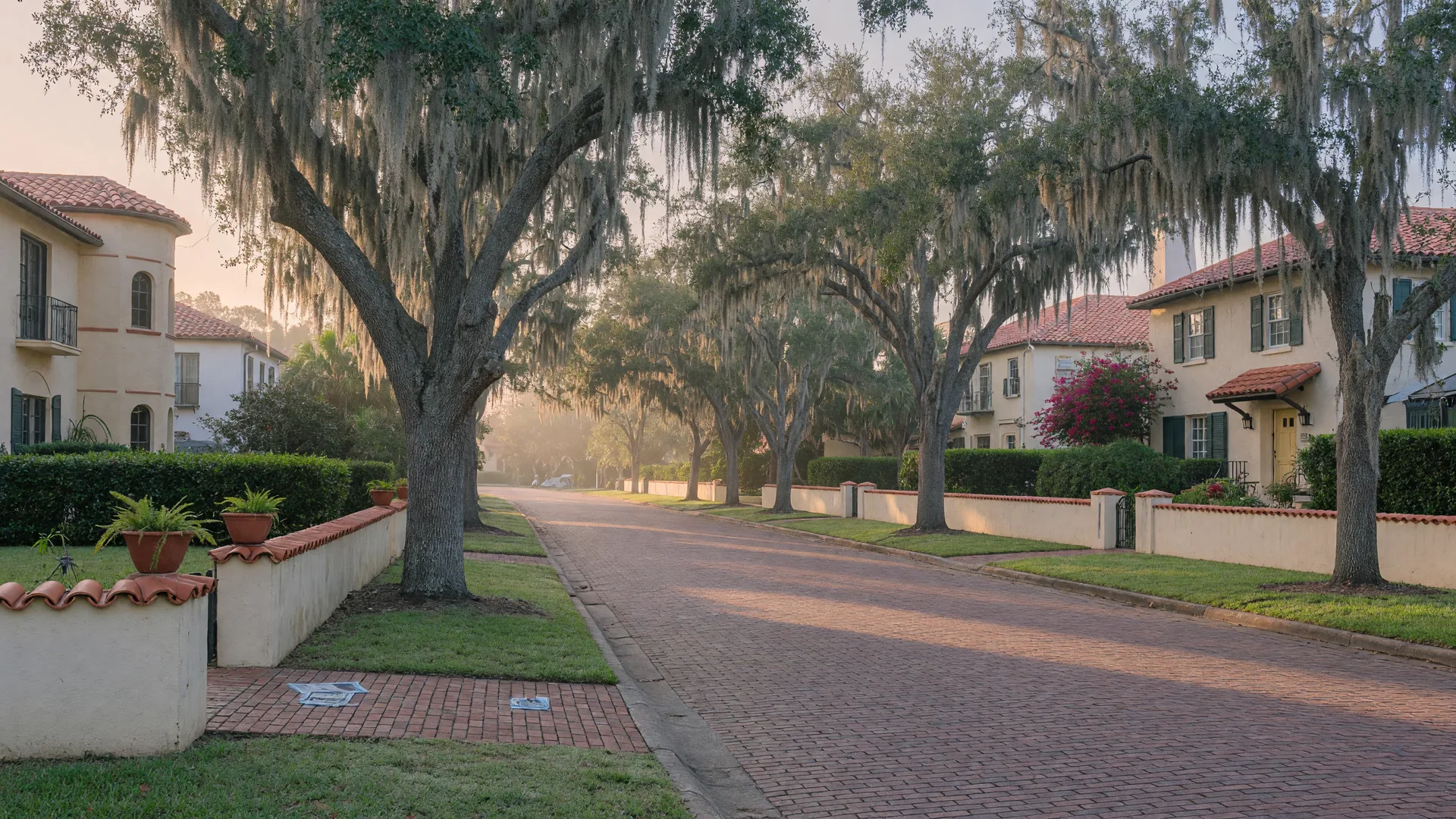
A residential street in Winter Park · live oaks, early morning light
The town
What it's like to live in Winter Park
Winter Park was planned in 1881 as a resort town, literally named for a park in winter, and it still lives at that unhurried pace. The center of town life is water: six lakes connected by hand dug canals, with the Scenic Boat Tour running along them since 1938. The rest is old Florida character, live oaks over brick streets, a downtown that hums on a human scale, and neighborhoods where families have a way of staying for decades.
The community feel is the part that surprises newcomers most. Rollins College, Florida's oldest college, sits on Lake Virginia and keeps the town young and intellectual. The Morse Museum holds the world's most comprehensive collection of Louis Comfort Tiffany. Saturday mornings the farmers market draws the whole town, and in March the Winter Park Sidewalk Art Festival turns Park Avenue and Central Park into one of the country's most respected juried art shows.
It is not a big city pretending to be small. It is a small city that has kept its own character on purpose, and that character is the reason most people never quite leave.

The map
Which Winter Park neighborhood fits your life?
Winter Park is small enough that the difference between neighborhoods comes down to character, not convenience. Here is the lay of the land the way I describe it to clients, and the full guides live on the neighborhood pages.
Downtown Winter Park & Park Avenue
The walkable heart of the city, where Park Avenue dining and shopping meet lakeside parks and the Morse Museum.
The Vias
The storied lakeside enclave along Lake Maitland, with Italian street names, brick paver lanes, and Mediterranean and Colonial revival homes from the 1920s and 1940s.
Virginia Heights
Historic, tree lined streets from the 1920s with bungalow, Mediterranean, and Tudor revival homes and a thoughtful wave of luxury renovations.
Lake Sue
Laid back lakeside living on the north side of town, close to the water and the quiet streets off the main roads.
Kenilworth Shores
Established and carefully kept, with mature trees, easy access to shops and schools, and a settled, unhurried feel.
Orwin Manor
Historic character in spades, with Mediterranean and Colonial revival homes that reward buyers who appreciate architecture with a story.
Windsong
A lakefront community along the shores of the chain of lakes, with some of Central Florida’s most desirable waterfront addresses.
Brookshire Heights
A close in, residential pocket of Winter Park where the character changes block to block, best understood street by street.
Winter Park Pines
Developed in the 1960s, lush landscaping, a serene atmosphere, and the Cady Way Trail nearby, a community where families stay for decades.
Homes across these neighborhoods typically run from about $500K to $2.5M and up, with the emphasis on luxury and properties over $1M. The price differences within Winter Park are about the street, the lot, and the water more than the neighborhood itself. Tell me how you want to live and I will point you to the right streets to start on.
Not sure which one fits yet? Answer a few questions about how you want to live and I will point you to the Winter Park neighborhoods worth a closer look.
Find Your Winter Park FitDowntown
Park Avenue and downtown
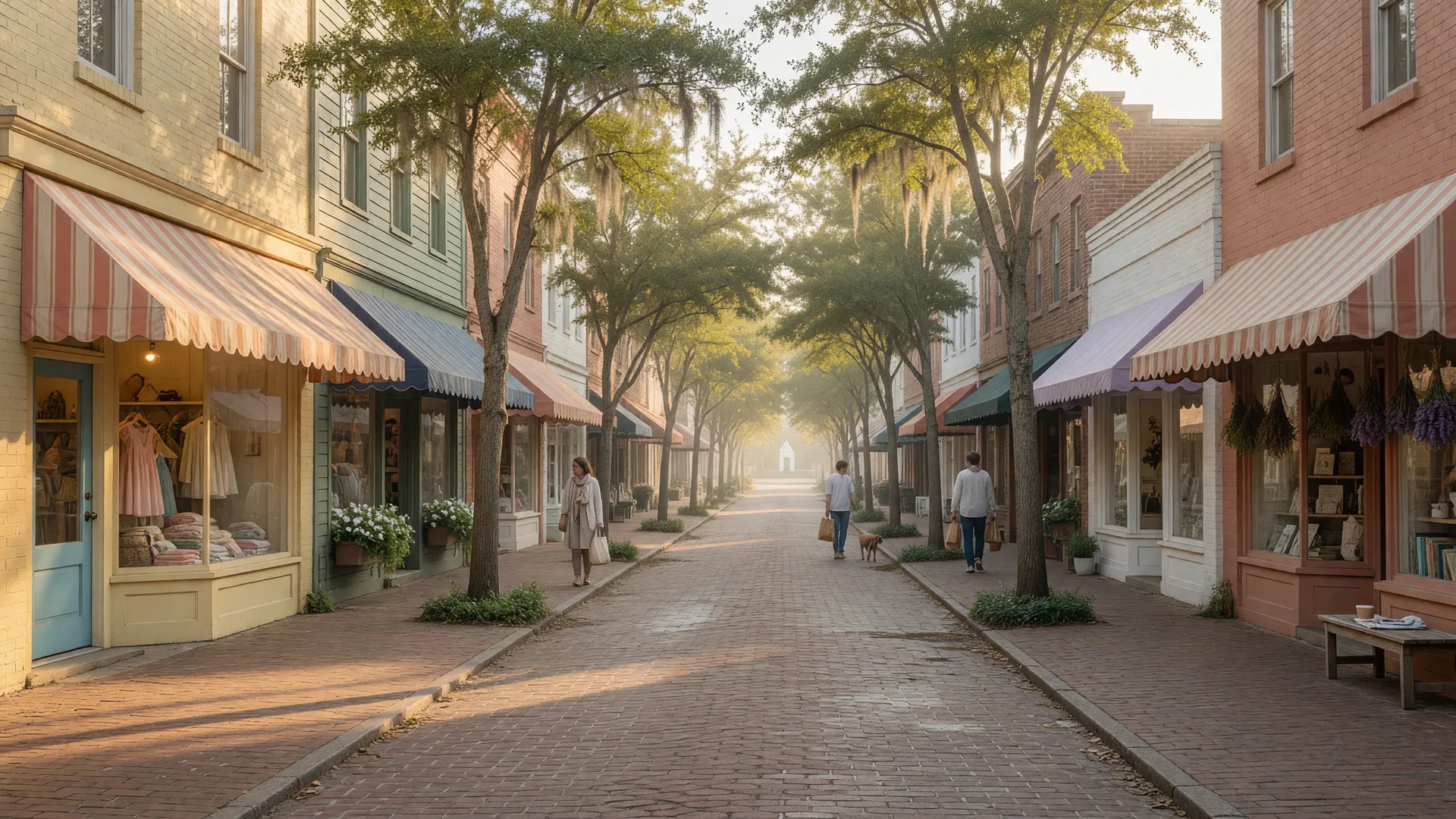
Park Avenue is the town's front porch, a brick paved mile of boutiques, galleries, restaurants, and people watching under the oaks. It is bookended by the green of Central Park and the lakefront, which makes it a place to stroll rather than just shop.
Cultural life sits right in the middle of it. The Morse Museum holds the world's most comprehensive Tiffany collection, the Polasek Museum & Sculpture Gardens sits on the lakeshore, and Rollins College anchors the south end of town on Lake Virginia. Every Saturday morning the City of Winter Park farmers market draws neighbors to browse produce, plants, and local crafts. Each March the Winter Park Sidewalk Art Festival turns the avenue and the park into a celebrated juried outdoor show.
Park Avenue tables I send friends to
- Briarpatch · the breakfast institution
- AVA MediterrAegean · a special occasion kind of table
- George's Cafe · lunch counter energy, done well
The water
The chain of lakes
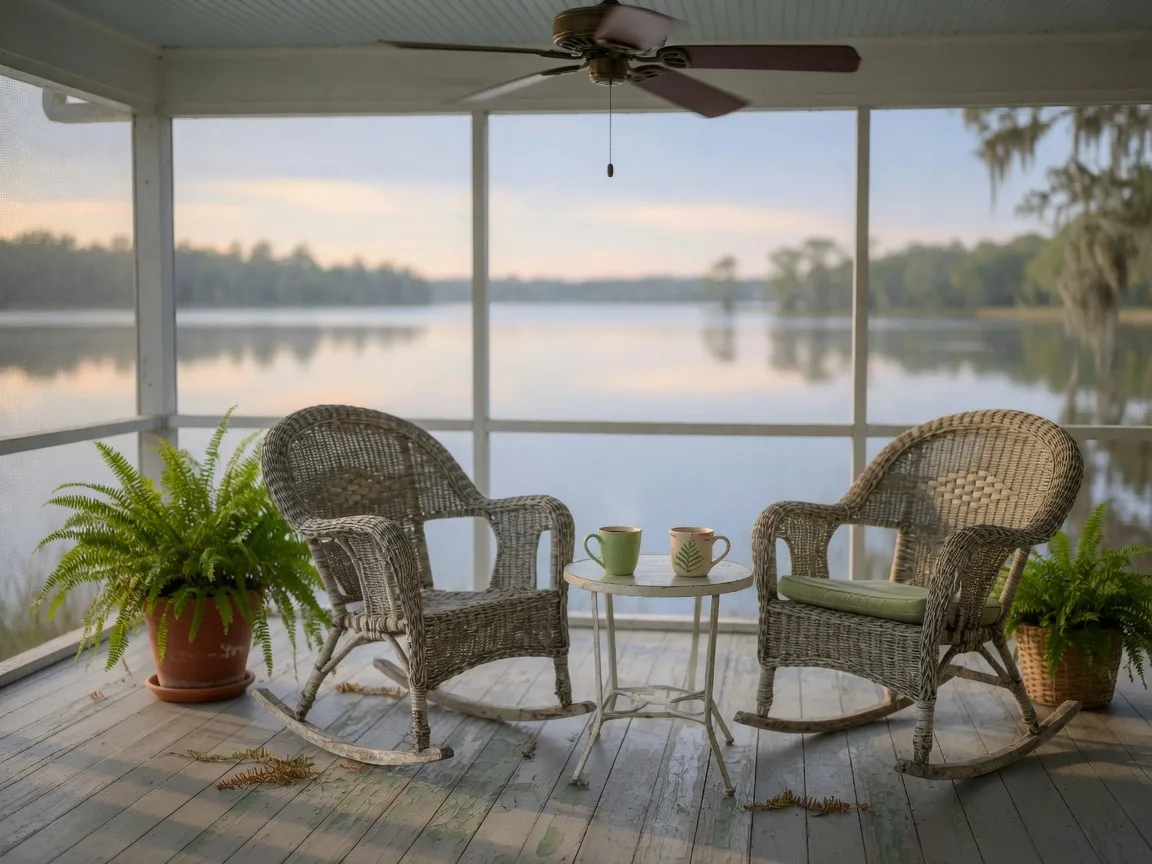
Six lakes make up the Winter Park chain, Virginia, Mizell, Osceola, Maitland, Nina, and Minnehaha, connected by hand dug canals that let boats, kayaks, and paddleboards travel the town by water. Lake life here is a daily rhythm, not a weekend vacation: people launch from Dinky Dock, cruise past the lawns and gardens in the Scenic Boat Tour, and end the day watching the sun drop over the water.
Lakefront living is the dream address for many buyers, and it carries real responsibilities: seawalls, docks, flood considerations, and community rules all deserve a close look before an offer. The reward is an address where the view and the lifestyle are part of the home itself. Neighborhoods like The Vias, Windsong, and the shores of Lake Sue and Lake Virginia define what lakefront Winter Park looks like, and the quiet greens of Kraft Azalea Garden on Lake Maitland are the perfect way to spend an afternoon.
The houses
Housing and architecture
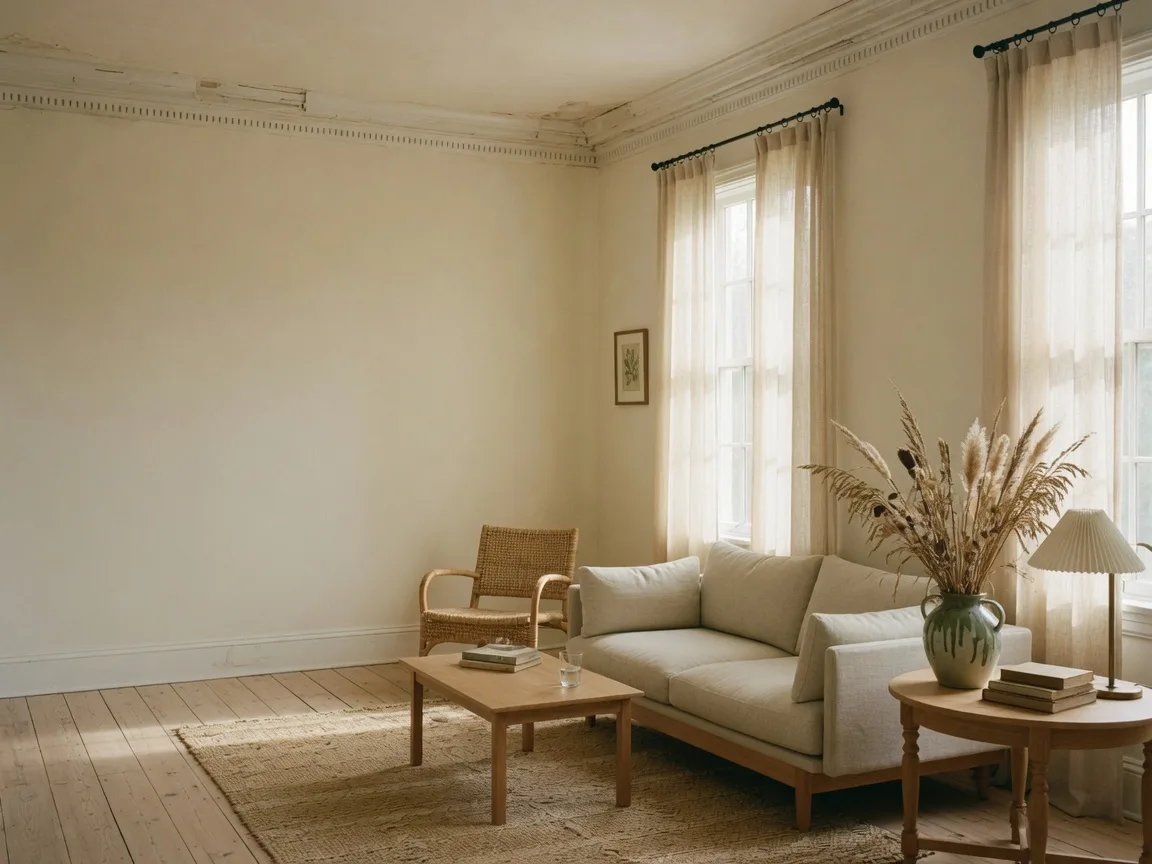
Winter Park's housing stock tells the town's story. Craftsman bungalows and Mediterranean revival homes from the 1920s and 1930s line the historic streets. Grand Spanish colonial estates anchor the lakefront in The Vias and along the chain. Mid-century ranches fill the established neighborhoods of the 1950s and 1960s. And today a steady wave of gut renovations and new construction is bringing modern finishes to the classic lots.
At the luxury level the market separates on finish quality, renovation history, lot, and water. A renovated historic home asks a premium for the character plus the new systems. New construction offers modern floor plans and efficiency with a brand new home warranty. Lakefront estates are the rarest of all, priced for the address as much as the house. Browse the lifestyle collections to see what is out there right now.
The top of the market
Luxury Homes
Premium properties across Winter Park, from $1M and up.
Browse homesOn the water
Luxury Lake Homes
Lakefront and lake view homes along the chain.
Browse homesBrand new builds
New Construction
Modern floor plans with today's finishes and systems.
Browse homesFairway addresses
Golf Course Homes
Homes near the region's private and public courses.
Browse homesResort style living
Luxury Pool Homes
Year round outdoor living with a pool at the center.
Browse homesEverything
All Winter Park Homes
The full live search across neighborhoods, price, and lifestyle.
Browse allGetting around
Winter Park, Florida: Traffic, Walkability & What It's Really Like to Live Here
One of the things that makes Winter Park feel different from much of Central Florida is that there are places where leaving the car at home is actually part of the lifestyle.
You can walk to coffee in the morning, meet friends for lunch on Park Avenue, wander through Central Park, stop at a boutique or gallery and have dinner without moving your car.
But that doesn't mean all of Winter Park is walkable.
If you're considering moving to Winter Park, especially from a larger city where walking and public transportation are part of everyday life, understanding how people actually get around town is important.
Is Winter Park, Florida walkable?
The short answer is: parts of Winter Park are exceptionally walkable, while other areas are still very car dependent.
That distinction matters.
Winter Park as a whole has an average Walk Score of 44, meaning most errands across the broader city require a car. Downtown tells a completely different story. A location directly on South Park Avenue near Central Park has a Walk Score of 92, which Walk Score classifies as a “Walker’s Paradise.”
That difference is one reason simply asking whether “Winter Park is walkable” doesn't tell you very much.
Where you live in Winter Park matters.
Downtown Winter Park and Park Avenue
This is the part of Winter Park where walkability becomes part of everyday life.
Park Avenue runs alongside Central Park and is surrounded by restaurants, cafés, boutiques, museums, offices and gathering places. The Winter Park SunRail station is also located downtown at 148 West Morse Boulevard.
Homes and condominiums close to Park Avenue can offer something relatively unusual in Central Florida: the ability to walk out your front door and reach a significant part of your daily routine on foot.
That might mean walking to breakfast, dinner, the farmers market, an appointment or an evening event.
And there is a practical difference between being “in Winter Park” and being “walkable to Park Avenue.”
For buyers who specifically want the latter, the individual street and exact location of the home deserve just as much attention as the ZIP code.
What is traffic like in Winter Park?
Winter Park isn't immune to Central Florida traffic.
The biggest difference is that traffic can change considerably depending on where you're going and the time of day.
Major roads carrying traffic through the area can become busy during morning and afternoon commuting periods. School traffic also makes a noticeable difference around some parts of town.
Then there is Park Avenue.
Traffic there tends to be less about making great time and more about sharing the street with pedestrians, people parking, restaurant guests, cyclists and everyone else enjoying downtown.
And that is somewhat the point.
Downtown Winter Park was never designed to feel like a highway running through the middle of town. The city's transportation planning specifically emphasizes walking, bicycling, pedestrian connectivity and public transportation alongside vehicle movement.
So if your definition of a great commute is getting from one side of town to the other as quickly as possible, certain Winter Park streets can require some patience.
If your definition of a great neighborhood is one where people are actually outside using it, you may see that same traffic very differently.
The railroad tracks are part of Winter Park life
This is something you don't always notice on a map when you're searching for homes online.
The railroad runs directly through the heart of Winter Park.
The downtown station serves both SunRail and Amtrak, and SunRail connects Winter Park with other destinations throughout the Central Florida corridor.
For some residents, having a train station in the middle of downtown is a major convenience.
It also means trains and railroad crossings are part of daily life in certain areas. If you're considering a home close to the tracks, it's worth spending time there at different hours rather than judging the location from a map.
That's one of those small details that can make a surprisingly big difference in how you experience a neighborhood.
Can you get around Winter Park without a car?
If you live close to downtown, you may be able to handle quite a bit of your daily life without getting into your car.
For most Winter Park residents, though, a car is still the primary way to get around.
Winter Park also has public transportation options. SunRail serves downtown Winter Park, and LYNX bus routes connect the area with surrounding parts of Central Florida. The city specifically includes SunRail and LYNX in its regional mobility planning.
So while Winter Park isn't a place where most residents completely give up their cars, certain locations make it possible to use them considerably less.
What about biking in Winter Park?
Biking is another part of the transportation picture, although the experience varies considerably by street.
The city maintains cycling and walking maps identifying bike lanes, shared-use paths and streets commonly used by cyclists. Its pedestrian and bicycle planning is designed to improve connections between neighborhoods, parks, schools and activity centers.
One of the better-known recreational connections is the Cady Way Trail, which provides another way to experience Winter Park and connect into the larger trail system.
You'll also see plenty of residents biking recreationally through neighborhoods, particularly during mornings and weekends.
Walkability changes neighborhood by neighborhood
This is where choosing a home in Winter Park gets interesting.
Two homes may both have a Winter Park address and offer completely different lifestyles.
A home near Park Avenue may allow you to walk to dinner and spend Saturday morning downtown without getting in the car.
Move farther into Winter Park's residential neighborhoods and you may trade some of that walkability for a larger homesite, quieter residential streets, a pool, lake access or simply more separation from downtown activity.
Neither is necessarily better.
They're different versions of living in Winter Park.
For some buyers, being able to say, “Let's walk to dinner,” is near the top of the wish list.
For someone else, the priority may be coming home to a quiet street beneath mature trees and driving five or ten minutes when they want to go downtown.
Understanding which version you want can make your home search much easier.
Something else buyers should know about Winter Park
Distances on a map can be deceiving.
A home that looks incredibly close to Park Avenue may not have the walking route you expect. A property slightly farther away may have a much more pleasant connection through residential streets.
The same applies to driving.
Your route to work, school, Interstate 4, downtown Orlando or another part of Central Florida can matter more than the straight-line distance shown on a listing.
Before buying, drive the routes you'll actually use.
Drive them at 8 a.m.
Drive them at 5 p.m.
Then park the car and walk the neighborhood.
You will learn things about a location in 30 minutes that you may never discover from a real estate listing.
So, do you need a car to live in Winter Park?
For most residents, yes.
But Winter Park offers something that isn't particularly common in Central Florida: neighborhoods where the car doesn't necessarily have to be part of every outing.
Downtown Winter Park is genuinely walkable. Other neighborhoods offer easy biking or short drives to Park Avenue, while areas farther from the center of town function much more like traditional Central Florida residential neighborhoods.
That's why “Is Winter Park walkable?” isn't quite the right question.
A better question is:
“How walkable do I want my life in Winter Park to be?”
Because in Winter Park, the answer can help determine not just which neighborhood you choose, but which street you call home.
The region
Location: just north of downtown Orlando
Winter Park sits just north of downtown Orlando, close enough that the broader region is at hand without surrendering any of the town's own character. The Orlando area airports, its major employers, world class healthcare, and the attractions that draw the world are all within easy reach from here.
For most residents that is the best of both worlds. Weekdays stay small and local, anchored by the lakes and the avenues of Winter Park. The bigger region, with its jobs, flights, and weekend destinations, is simply there when you need it.
Moving from out of state?
The relocation guide
What out of state buyers should know before moving to Winter Park, from the pace of the market to Florida ownership realities.
Read the guideBuying next
The buying guide
How to buy a Winter Park home with confidence, including $1M and lakefront purchases.
Read the guideThe honest part
What buyers should know before they buy
The street matters more than the zip.
Winter Park values move block by block. Two homes a street apart can be worth meaningfully different amounts based on the lot, the water, and the character of the block. A real estate professional who lives here and knows the streets is not a luxury, it is the whole point.
Older homes reward a careful eye.
Much of Winter Park's stock was built in the 1920s through the 1960s. Inspections matter, and renovation history, roof, systems, and foundation condition should be understood before you commit. The best buys are often the well maintained older homes priced for the work still ahead, bought by buyers with a clear plan.
Waterfront is a different commitment.
Seawall condition, dock and lift permits, flood insurance, and community rules belong in every lakefront decision. The chain of lakes is actively shared, which is a joy, and it is also something to understand before you own a piece of it.
Florida ownership has its own rhythm.
Insurance and storm readiness are part of owning property in Florida, and the market here moves on its own seasonal cadence. None of it is an obstacle. It is part of the picture, and the buyers who do well are the ones who see it early rather than after closing.
Luxury pricing is about story, not square footage.
At the top of the market, value rests on finish quality, renovation history, the lot, the water, and how the home is presented. Homes across Winter Park typically run from about $500K to $2.5M and up. The right price for a particular house is something a specialist prices street by street, not from a spreadsheet.
You have options.
Buy first or sell first, renovate or move, stay in the neighborhood or explore a new one. Most of my clients call when life has changed and their current home no longer fits where they are going. The first conversation is about the bigger picture, and the real estate decisions come after.
If you are weighing a move to Winter Park, the honest first step is a conversation, not a search. Tell me about your life and I will tell you which streets to start on. Start the conversation
Quick answers
Frequently asked questions about living in Winter Park
What is it like to live in Winter Park?
Winter Park keeps the small city, resort town character it was planned for in 1881. Daily life is shaped by lakes, live oaks, and brick streets, with a walkable downtown that draws the whole town on Saturday market mornings. People stay for decades, and the cultural life built around Rollins College and the Morse Museum gives the town a settled, confident sense of place.
Which Winter Park neighborhood is right for me?
That depends on how you want to live. Downtown and Park Avenue suit buyers who want the walkable core. The Vias is the storied lakefront address. Virginia Heights offers historic charm with a wave of luxury renovations. Windsong is pure lakefront. Winter Park Pines is family friendly and calm. The differences come down to character more than convenience.
What are the best neighborhoods in Winter Park for luxury homes?
The Vias, Windsong, and the lakefront edges of Virginia Heights carry many of the classic luxury addresses. Luxury homes in Winter Park typically run from about $750,000 to $2.5M and up, and lakefront properties command a premium. Value at that level rests on the street, the lot, and the water more than the zip code.
Is Winter Park walkable?
Downtown Winter Park and Park Avenue are genuinely walkable, with the farmers market, museums, shops, restaurants, and lakefront parks close together. Beyond that core, Winter Park is a car friendly town, and most residential neighborhoods need a car for errands and schools.
What should I know before buying a lakefront home in Winter Park?
Understand the water before the house. Seawall condition, dock and lift permits, flood insurance, and any community rules all belong in your due diligence, and the chain of lakes is actively used by boats, kayaks, and the Scenic Boat Tour. A good lakefront purchase starts with a clear picture of what the waterfront actually requires.
Should I buy an older Winter Park home or a renovated one?
Older Winter Park homes carry the architecture and character the town is known for, from craftsman bungalows to Mediterranean revival. Renovation history and the condition of the systems drive value, so a renovated home commands a premium while a dated one is a project. Inspections, budget, and a longer lens make the call.
How close is Winter Park to Orlando?
Winter Park sits just north of downtown Orlando, with the Orlando area airports, major employers, and attractions within easy reach while the town keeps its own identity. Many residents enjoy the best of both: a small city home base with a big region at hand.
What is the Winter Park farmers market like?
Every Saturday morning the City of Winter Park farmers market draws neighbors to browse produce, plants, and local crafts. It is a genuine town ritual, the kind of weekly gathering that makes a new address feel like home faster than almost anything else.
Start the conversation
Let's find the neighborhood that fits the life you're building.
35+ years in Winter Park, 10 years guiding buyers and sellers, and one advisor who will give the decision the attention it deserves.