
Buying & Selling · Winter Park, Florida
Flood Insurance and Your Winter Park Home: What the December 11 Deadline Means

Melissa Johnson
Luxury Realtor & TV Host
· Buying & Selling
Flood insurance has become one of the first questions in my Winter Park conversations lately, because the rules changed and there is a date on the calendar worth knowing. Congress reauthorized the National Flood Insurance Program only through December 11, 2026, and what happens at that deadline affects buyers, sellers, and lakefront homeowners in very different ways. I am not an insurance agent, but I help clients work through flood maps, disclosure forms, and coverage requirements every week, so here is the current picture and what it means for your home.
Part One
Why December 11 matters for your home
The National Flood Insurance Program, the source of most flood policies in Florida, is not permanently funded. Congress extends it in short bursts, and the latest extension runs only through December 11, 2026, part of the spending bill signed in early September. If Washington does not act again by then, FEMA stops selling new flood policies and stops renewing policies that come due, while policies already in force keep running to the end of their term and valid claims keep being paid.
That last part is important: a lapse is not a cliff for everyone at once. It is a stall. Buyers with federally backed loans on homes in a FEMA flood zone cannot close without an active policy, and a renewal that falls inside a lapse simply does not get processed. When the program lapsed for 43 days in late 2025, industry reporting put roughly 1,300 closings a day on hold nationwide, and Florida, which holds more flood policies than any other state, felt it most.
Part Two
The Citizens requirement that surprises longtime owners
Separate from Washington, Florida made its own change on January 1, 2026. If you carry a Citizens Property Insurance wind policy on a home with a dwelling replacement cost of $400,000 or more, you are now required to carry separate flood coverage as a condition of that wind policy, even if your home sits in Zone X, the FEMA designation for low and moderate risk. The trigger is your insured value, not the flood map.
Citizens phased this in deliberately: the threshold was $600,000 in 2024, $500,000 in 2025, and $400,000 from January 1, 2026, with all remaining properties set to follow in 2027. In a market like Winter Park, where replacement costs above $400,000 are common, that means a meaningful share of homeowners now need a flood policy they never carried before. If you received a note from Citizens about flood coverage, it is not an error.
Flood is one layer of the larger insurance picture, so if you want the full tour of hurricane deductibles and this year's non-renewal notices, my guide to Florida homeowners insurance covers those question by question.
That note now has a final date: effective January 1, 2027, Citizens removes the value threshold and applies the requirement to essentially all of its remaining personal residential wind policies. If you carry a Citizens policy, my guide to the January 1 flood coverage requirement walks through who it covers, the exceptions, and what to do before your renewal.
Part Three
What sellers must disclose at contract
Florida's flood disclosure law, SB 948, took effect October 1, 2025, and it changed what sellers hand over at contract. The written disclosure covers whether you have ever filed a flood damage claim, including with the National Flood Insurance Program, whether you have received any flood damage assistance, whether the property sits in a flood hazard zone, and whether flood insurance is required for it. The 2025 update also added any flood damage to the property from any source during your ownership.
If you have a prior claim or received assistance, the law goes further: you provide a separate disclosure, and the buyer has to acknowledge it in writing. This is one of the details I help sellers organize before we list, because a complete, accurate disclosure is part of a smooth, confident closing, and it is one of the first documents a smart buyer should ask to see before signing anything.
Part Four
The Winter Park map: lakefront is where the zones get real
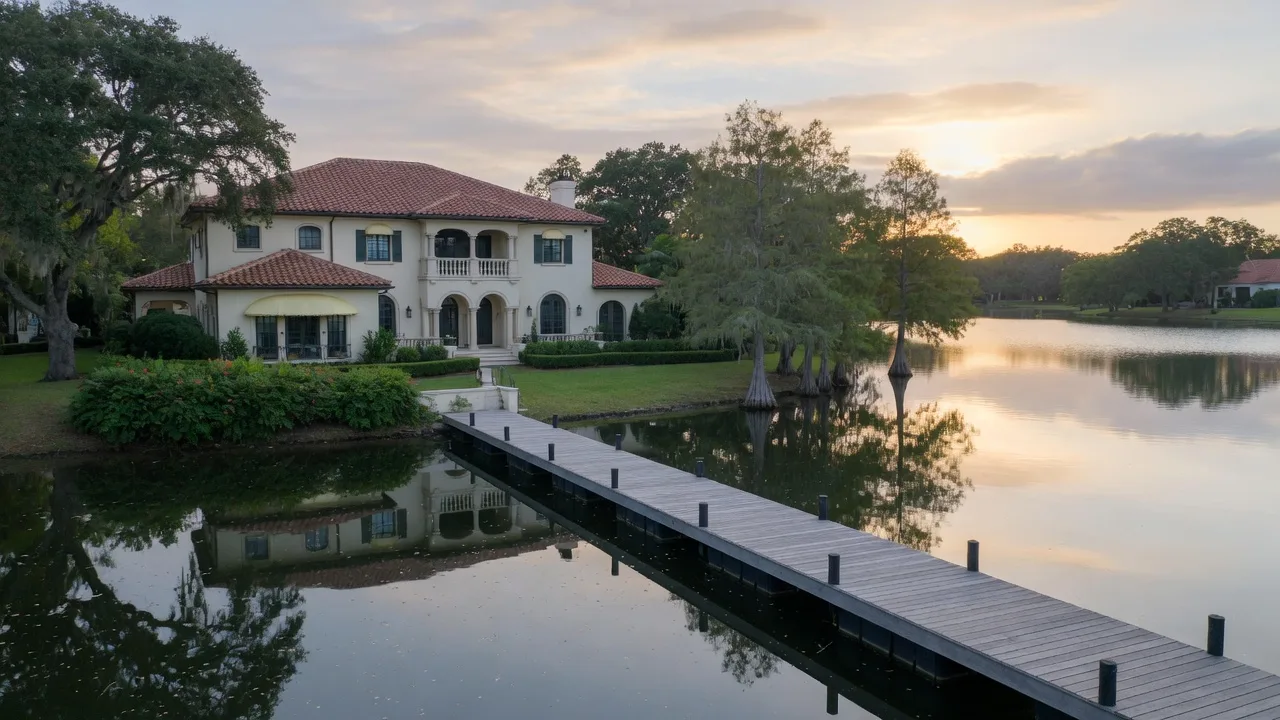
Winter Park's floodplains are the lowlands along the chain of lakes and the canals that link them. The city's flood maps carry most shoreline parcels on Lake Maitland, Lake Virginia, and Lake Osceola in Zone AE, a Special Flood Hazard Area with a defined base flood elevation, and for a home in that zone a federally backed mortgage requires flood insurance, full stop.
But the map is parcel specific. Some shoreline lots sit in Zone AE while higher elevation lakefront properties map to Zone X, so the only way to know your picture is to check the FEMA Flood Map Service Center for your exact address and, for lakefront homes, to get an elevation certificate. The chain's flood season runs mostly June through October, and hurricane season stretches to November 30, which is exactly why this feels timely right now. The city manages lake levels with weirs and gates, but the maps are public record, not a matter of opinion. If you are weighing a lakefront purchase, my full checklist on lakefront living in Winter Park is worth a read.
Part Five
What flood coverage actually costs
The number is more modest than most people expect, and it is knowable before you commit. FEMA's own policy data puts the median Florida single family flood policy around $1,000 a year, with averages a bit higher, and the exact figure depends on your property, not just your zone. Since 2023, NFIP pricing has considered the individual home's flood characteristics rather than a one size fits all table.
Private flood insurance is a genuine alternative, it is accepted by federally backed lenders, and in Florida it often quotes below NFIP for lower risk homes. That is also why private coverage kept closings moving during the last lapse. At the median, flood coverage lands somewhere around eighty dollars a month before you compare private quotes, which makes it a line item to plan for, not a reason to change your plans.
Part Six
What this means whether you are buying or selling
If you are buying, make flood part of your budget before you make an offer, not after. Check the flood map for the exact parcel, ask for the seller's flood disclosure form, and ask about any prior claims. For lakefront homes, plan for an elevation certificate the way you plan for an inspection, and confirm the coverage picture with your lender and insurance agent early, because the loan cannot close without it. I walk buyers through every one of these details on the buying side.
If you are selling, your flood paperwork is part of your home's story. Know your policy and its renewal date, gather any prior claim history before you have to describe it, and complete the disclosure form accurately at contract. A home with a clean, organized flood picture is easier for a buyer's lender to approve, and that translates directly to a smoother closing. Putting that paperwork in order is one of the ways I help sellers get ready on the selling side.
Your home's value and its full cost of ownership, including insurance and flood coverage, are knowable before you decide anything. Let's find your real numbers together.
Let's talk